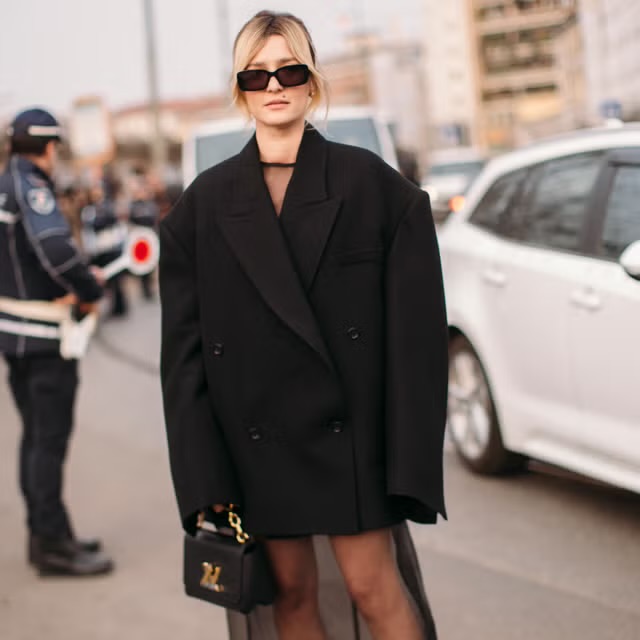
Oversized blazers are not disappearing in 2026; they are simply sharing space with sharper, shorter tailoring. That matters because the oversized blazer has moved beyond being a single-season trend. It has become a wardrobe tool: one layer that can make denim, dresses, skirts and relaxed trousers feel more deliberate.
Vogue Germany reported that oversized blazers were still dominating fashion-week street style in Milan, New York and Paris in spring 2026, even as British Vogue noted a parallel move towards cropped jackets and closer fits. The useful conclusion is not that one silhouette has replaced the other. It is that tailoring has become more varied.
Why the oversized blazer still works
A roomy blazer creates structure without feeling restrictive. Strong shoulders and a longer line can sharpen a T-shirt and jeans, while fluid fabrics make the same shape work over a slip dress or wide-leg trousers. That versatility is why the silhouette has survived after so many other pandemic-era proportions faded.
Current retail assortments make the point clearly. COS still carries multiple oversized and longline blazers, including its Oversized Draped Double-Breasted Blazer, while also offering cropped and waisted alternatives.
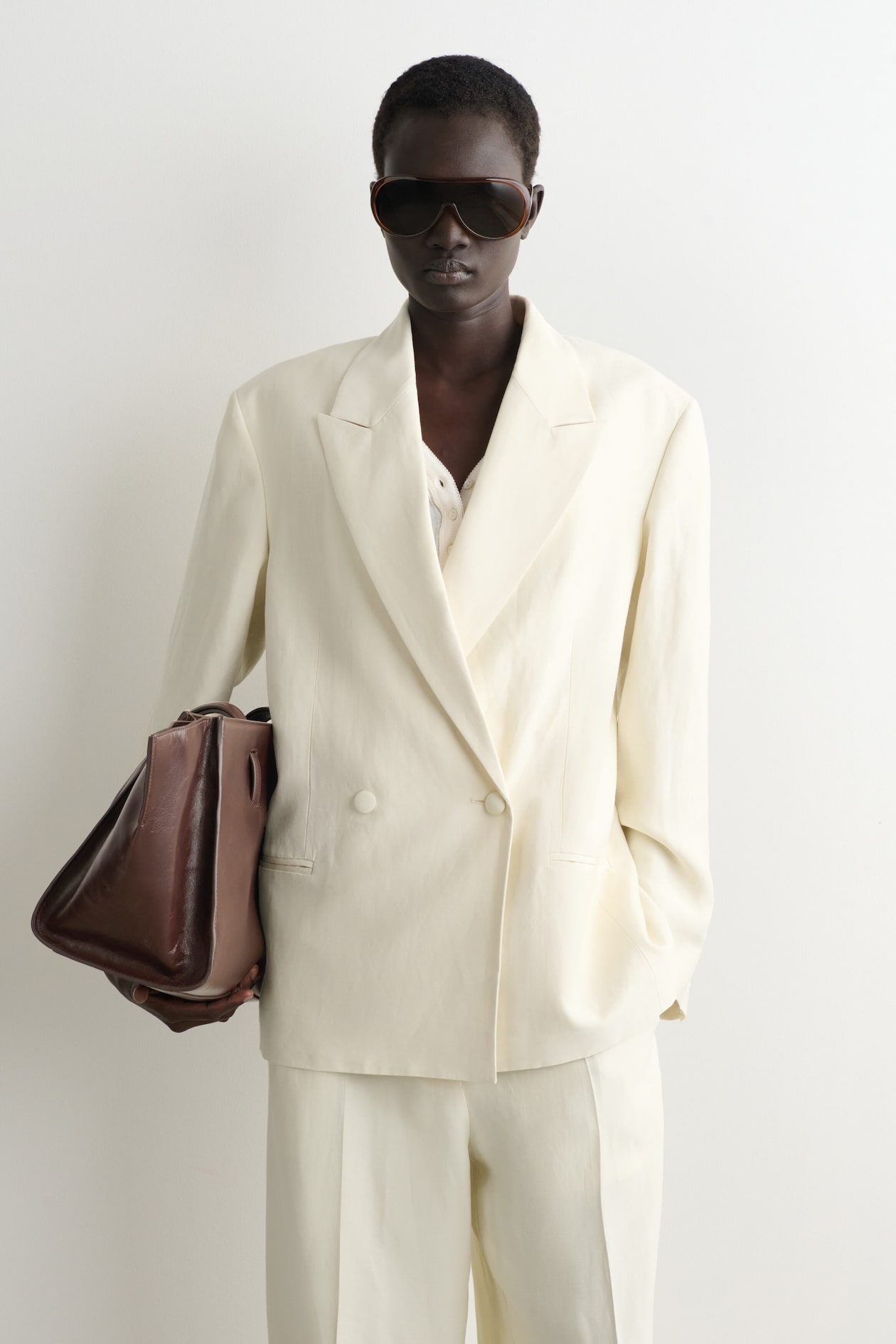
The 2026 version is more considered
The easiest way to keep an oversized blazer looking current is to balance the volume. Pair it with a narrower top, a straight skirt, fitted knitwear or trousers with a cleaner line. If both the blazer and the bottom half are oversized, keep the shoes and accessories visually lighter so the outfit does not feel swallowed by fabric.
Colour matters too. Black and navy remain the safest investment, but brown, khaki and soft grey give the shape a less corporate feel. Pinstripes can work especially well because the vertical line adds definition to a loose cut.
The oversized blazer is no longer the only tailoring shape that matters, but that may be exactly why it has become more useful. It is now an option rather than a uniform — and the best outfits use it that way.