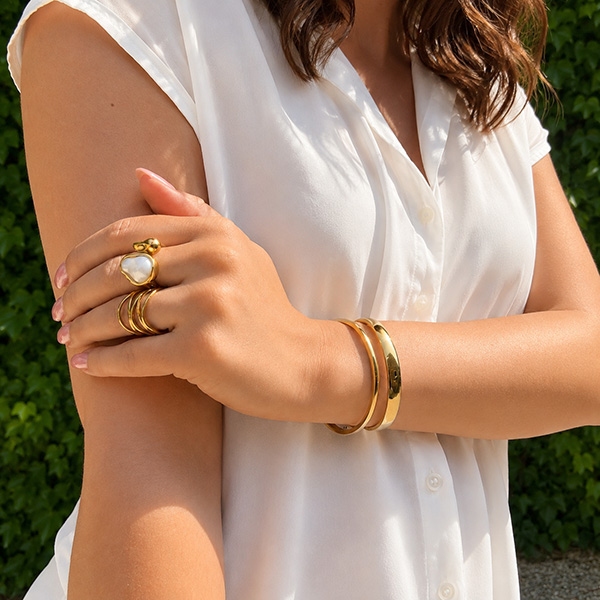
Scroll through affordable jewellery sites and you will increasingly see two phrases beside very similar-looking gold-tone pieces: “gold plated” and “PVD coated”. They are not interchangeable, and the difference matters most once a piece starts being worn regularly.
The short version: PVD is a coating process, not a guarantee of a particular gold thickness or lifespan. It can produce a hard, well-bonded decorative finish, especially on stainless steel or titanium, while conventional electroplating is usually the more familiar route for depositing a thin layer of metal onto a base. But the final durability of either piece still depends on the coating chemistry, the substrate, surface preparation, thickness and how it is worn.
What does PVD actually mean?
PVD stands for physical vapour deposition. In broad terms, material is vaporised in a vacuum environment and deposited onto a prepared surface. Jewellery is only one of many applications for the process; PVD is also used in industrial coatings where wear and corrosion resistance matter.
One important correction to the usual marketing explanation: PVD jewellery is not always simply “solid gold vaporised atom by atom onto steel”. Decorative gold-tone PVD systems can use different coating chemistries and layer structures. That is why “PVD” on its own tells you how the coating was applied, but not everything about what the finish contains.
How is that different from traditional gold plating?
Traditional gold plating normally refers to electroplating: a conductive piece is placed in a solution and an electrical current deposits metal onto its surface. It is a long-established process and can be done to different standards, so “gold plated” is a very broad description rather than a fixed durability grade.
That is also why blanket claims such as “PVD lasts ten times longer” or “gold plating lasts exactly one year” should be treated cautiously. There is no single jewellery-wide PVD specification and no universal electroplated thickness. Two products carrying the same headline description can perform very differently.
So which tends to be more durable?
For everyday fashion jewellery, a well-applied PVD finish on stainless steel or titanium will generally be chosen when a brand wants a harder, more abrasion-resistant surface. Industrial coating specialists such as Bodycote use surface-engineering processes specifically to improve wear and corrosion performance, which is the same broad reason PVD has become attractive in jewellery.
But the sensible buying question is not simply “PVD or plated?”. Look for the base metal, the exact finish, care guidance and whether the brand makes realistic claims. Stainless steel and titanium are useful bases because they are already corrosion-resistant before a decorative coating is added.
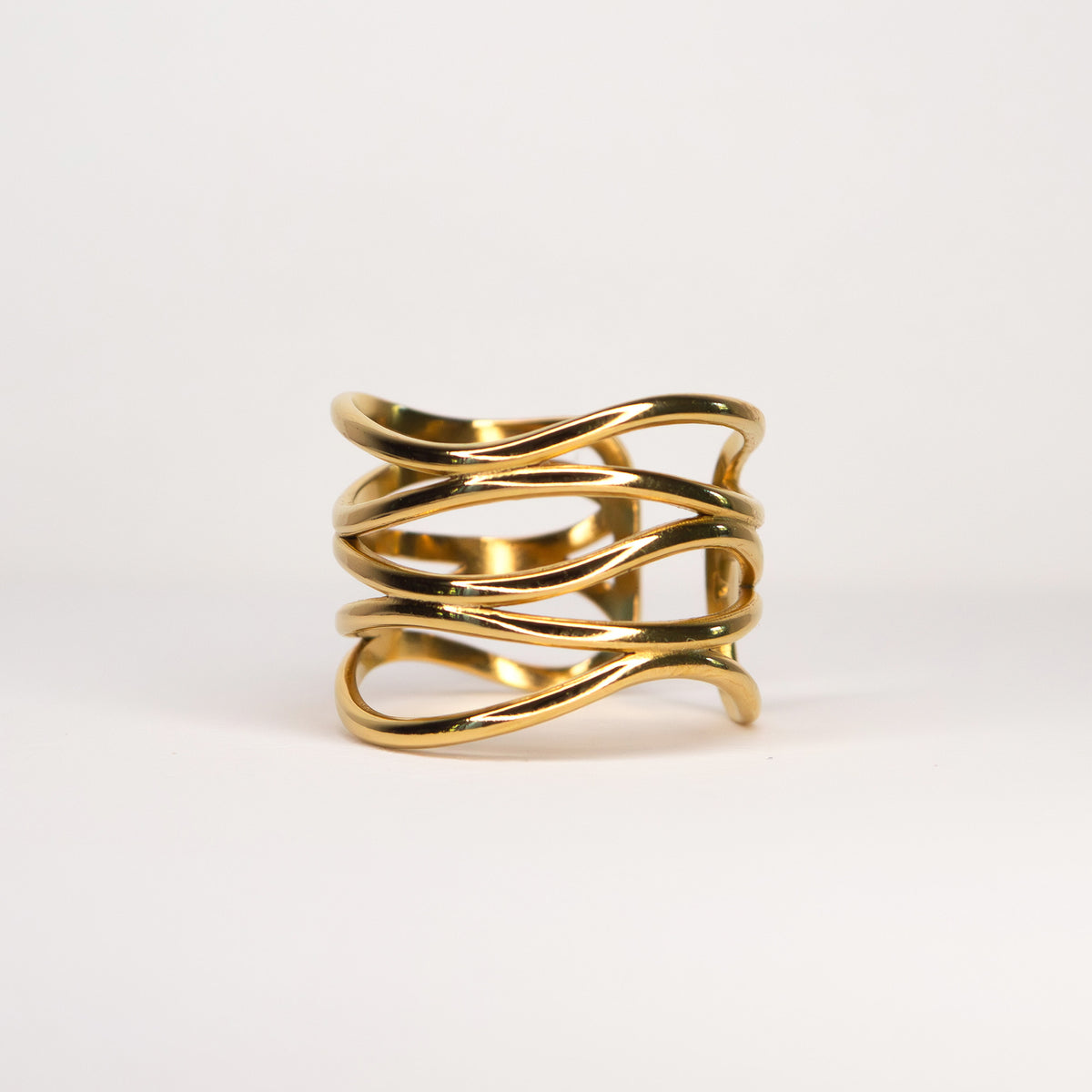
For example, Tamola’s Naya Layered Open Ring is sold as stainless steel with a gold-tone finish and positioned for everyday wear. The useful part of that listing is the transparency around the base material; it does not need to be presented as “PVD” unless the brand explicitly specifies that process.
Is PVD jewellery waterproof?
“Waterproof” is too absolute for coated jewellery. A durable PVD finish may tolerate ordinary moisture better than a delicate plated finish, but chlorine, salt water, perfume, sunscreen, cleaning chemicals and abrasion can all shorten the life of a surface treatment. “Water-resistant” or “water-safe for everyday wear” is the more realistic language.
That distinction matters because coating wear is cumulative. The underside of rings, bracelet edges and necklace clasps usually see more friction than a pendant face or earring, so identical finishes can age differently depending on the design.
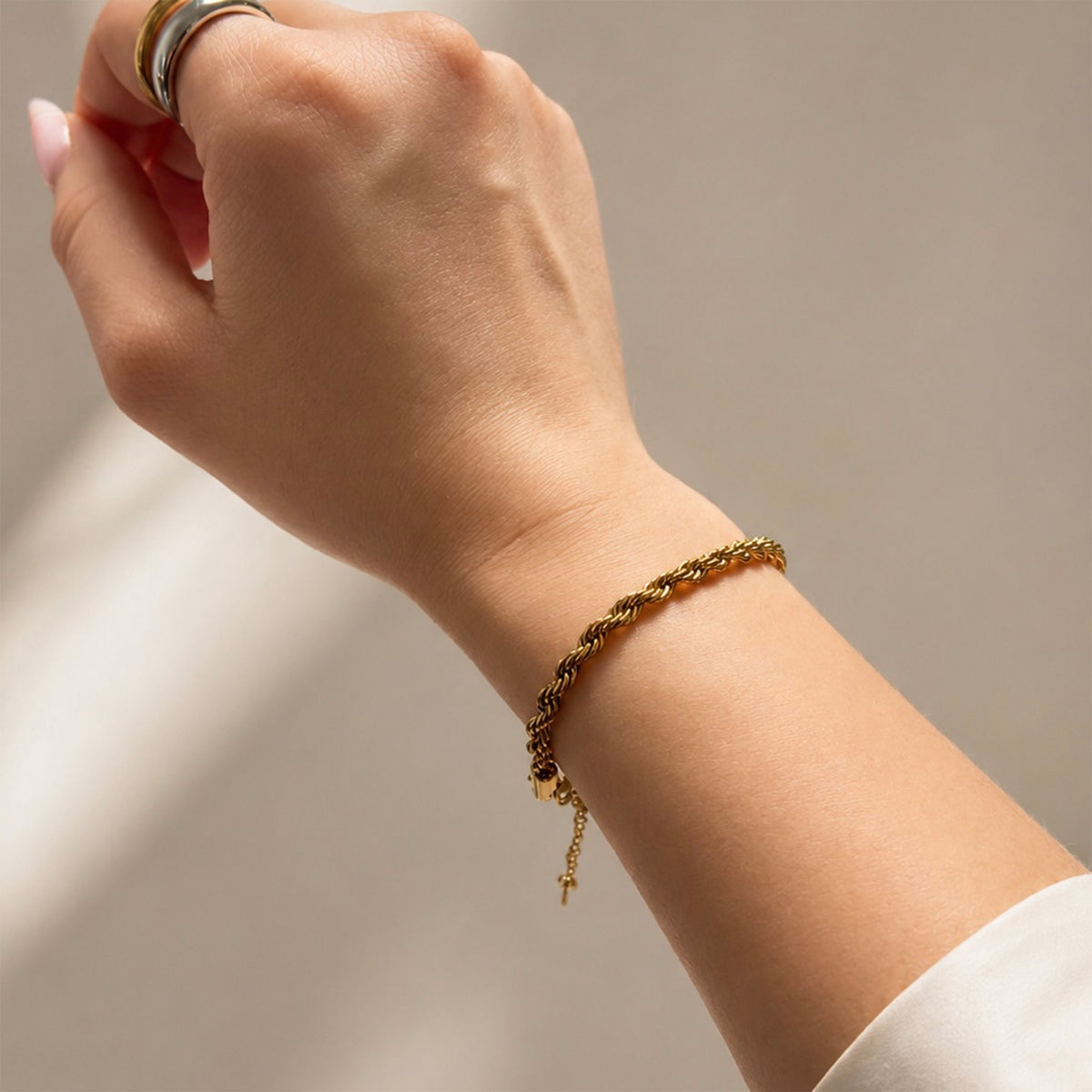
What about gold vermeil?
Vermeil is a different buying proposition again: it uses sterling silver as the base rather than stainless steel or brass. Standards vary by market, so do not assume every European product using the word is made to the same legal specification used elsewhere. The practical comparison is simpler: vermeil gives you a precious-metal base, while stainless-steel PVD jewellery is usually bought for low-maintenance everyday wear at a more accessible price.
Which should you buy?
If you want an everyday piece and care most about durability, start with the base metal and the brand’s care claims. Stainless steel or titanium with a clearly described PVD finish is a strong option. If you want a lower-cost occasional piece, conventional gold plating can still make sense. If you want sterling silver underneath the gold layer, look at vermeil.
The label matters, but the construction matters more. A trustworthy product page should tell you what the piece is made from, what the finish is, and what kind of wear the brand actually recommends.